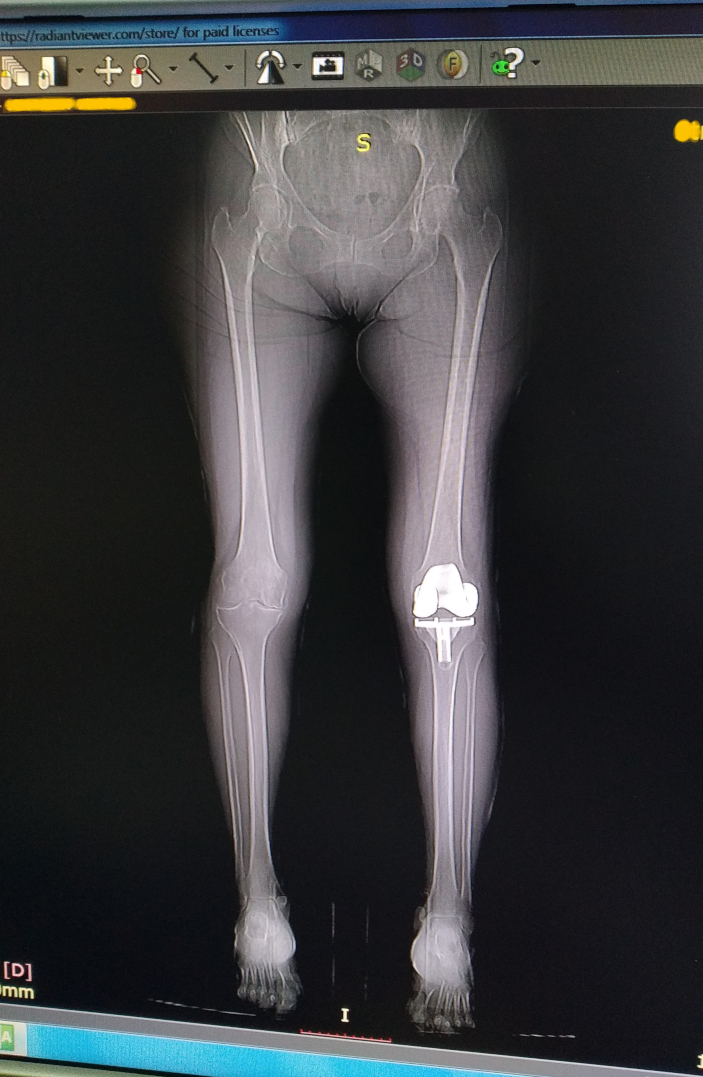
Arthroplasty (endoprosthesis) of the knee is a surgical intervention, the purpose of which is to replace the working surfaces of the joint with artificial friction pairs. It is performed for non-healing injuries and joint diseases. The main disease that leads to joint replacement is arthritis, arthrosis. Gonarthritis (gonarthrosis) is a disease in which the cartilage of the knee joint is destroyed, as a result of which there is a limitation of movements, deformation and pain syndrome. The main mechanism of the development of arthrosis is a violation of the blood supply of cartilage tissue and the subchondral zone. In the most modern classification, there are 4 stages of arthrosis/arthritis.
Artificial joint components are made of various materials: titanium, tantalum, polyethylene, ceramics, stainless steel, cobalt, chrome. Mandatory requirements for prosthesis components are bioinertness, strength and replaceability. Special medical cement is used for fixation. In case of wear or instability, the replacement of the component or the entire prosthesis is possible. This intervention is called revision endoprosthesis.
Total knee endoprostheses can be divided into 3 types: - unconnected (almost not used); - semi-bonded (with or without preservation of PCA); - tied-hinged (allows to replace a joint with damaged ligaments or an extensor apparatus)
Single condyle endoprosthesis (unipolar) can be singled out separately, indicated for an isolated lesion of one condyle. Total knee arthroplasty with replacement of the patellar surface is called three-pole knee arthroplasty.
The main criterion for indications for total endoprosthesis is pain syndrome, that is, the patient himself decides when to perform joint replacement. You should not wait for pronounced deformation and restriction of movements, because later the operation becomes more difficult for both the patient and the doctor.
Modern equipment and minimally invasive technologies allow minimal blood loss during joint replacement operations. Therefore, the average stay of a patient in a hospital makes 1-3 days. And the patient starts walking the same evening or the next day after the operation. The price of knee endoprostheses ranges from $1,000 to $10,000, depending on the materials and manufacturer. The most valuable are connected endoprostheses of the knee.
Recommendations to the patient before knee arthroplasty
Before having a knee replacement, first of all, inform your family doctor. For a preliminary examination, you can perform a clinical blood test, blood glucose, coagulogram, biochemical blood test with a proteinogram, urinalysis, electrocardiogram. An anesthesiologist or an orthopedic traumatologist will also prescribe an examination during hospitalization. Before knee joint replacement, it is important not to delay taking medications recommended by doctors of other specialties. Use blood thinners (anticoagulants) only on the recommendation of doctors. Coordinate the intake of medication and the need for crutches or orthoses with the orthopedist already at the stage of planning the date of the intervention. On the day of surgery or examination, come on an empty stomach, it is preferable not to eat or drink in the morning. If there is a significant period of time between the examination and the surgical intervention, coordinate this with the anesthesiologist or attending physician. You can shave your knee on your own the day before surgery. You can take personal hygiene products (toothbrush, toothpaste), phone, laptop with you to the department. The clinic provides towels, bathrobes, bed linen, disposable shoes and three meals a day. The rooms are equipped with a bathroom with a shower, a TV, a functional bed and a Wi-Fi network. Relatives can visit the patient if adhering to sanitary and hygienic requirements. Patient stays in the orthopedics department for 1-3 days in average.
Recommendations after knee arthroplasty
(This information may not be objective in your personal case, please, agree it with your doctor)
Basic principles:
Gradual load. The stability of implants is provided by soft tissues - muscles, ligaments and joint capsule. The tissues that were sewn during the operation and the scars around the implants need to grow and strengthen, which takes around 3-4 weeks. Gradual loading stimulates the strengthening of soft tissues and bones. Instead, lack of load leads to atrophy, and excessive sudden load can damage tissues.
Prevention of thromboembolism. After surgery, there is a threat of embolism due to blood clots that form in congested vessels. During 2-4 weeks after the intervention, you should take anticoagulants - drugs that thin the blood. Coordinate the method of application and dosage with the doctor. Also, to prevent thromboembolism, use compression stockings or elastic bandages. Avoid excessive blood pressure and heart palpitations during exercise and movement.
Accompaniment. The first steps should be taken only in the company of medical workers, so that in case of loss of balance they can hold you or soften the fall. To equalize the pressure, before getting up, you need to sit in bed for 3-5 minutes.
Weight management. Excess weight harms both the operated joint and other joints. An increase in body weight reduces the resource of the friction pair of implants and harms the body in general, overloads the heart and violates blood supply. To lose weight, you need to organize adequate quantitative and qualitative food intake and increase physical activity. Before using diets, you should consult with your family doctor and certified dietologist.
Prevention of infections. After endoprosthesis there is always a risk of tissue infection around the implant. Infection is almost always accompanied by instability of the joint. During the intervention and after the operation, the patient receives antibacterial drugs to prevent infection. The wound can be soaked 2-3 days after the removal of stitches, which is performed 2 weeks after the intervention. When performing examinations or contacting doctors, always inform about the presence of implants. It is known that alcohol consumption and smoking increase the risk of infection, damage functions of tissues, impair immunity and violate blood supply.
Communication with the doctor. You can and should call a doctor every time you need. If you have any doubts or forgot to ask something, do not hesitate to call. It can save from complications development. Pay special attention to the shortening or deformation of the limb, a sharp decrease in the range of motion, aggravation of pain and increased swelling, wetting of the bandage, redness in the area of the postoperative wound, an increase in local or general temperature. Pains behind the sternum, shortness of breath, loss of sensitivity, complicated urination and defecation also require attention and doctor's consultation.
After knee arthroplasty it is necessary to remember that knee joint is easily cooled which may cause development of tissues inflammation. In case of using bandages and tutors follow them not to compress soft tissues as far as it may lead in ischemia and venous congestion in the extremities leading in thrombs formation. Compression stockings and elastic bandages should compress minimally and evenly. UHF-therapy, ultrasound and shockwave therapy, electroprocedures, magnetic and harsh heat procedures are condtraindicated to patients after knee joint replacement.